


The second day of the Spain Real Estate Summit 2026, organised by Iberian Property in Madrid, focused on the property market’s ability to adapt to an environment of high interest rates, greater volatility and increasing operational demands. From REITs to data centres, via residential, retail, logistics, offices, healthcare and major urban developments, the various sessions converged on a common theme: Spain remains attractive to international capital, but investment demands greater discipline, scale, specialisation and a precise understanding of each asset and location.
REITs defend their ability to adapt in an environment of high interest rates and volatility
The second day of the event opened with a panel discussion on the role of REITs as investment vehicles in the new property cycle. Introduced by Dominique Moerenhout, CEO of EPRA, the session brought together Marie Cheval, Chairman and CEO of Carmila; Ismael Clemente, CEO of Merlin Properties; Tugdual Millet, CEO of Covivio Hotels; and Patrick Couttenier, CEO of Care Property Invest, in a discussion focusing on the resilience of listed real estate, adaptation to the environment of higher interest rates, and the differences between the European and US markets.
The starting point was a constructive view of the market, with expectations of a more visible recovery during the second half of the year and the observation that the sector has held up well in a context marked by uncertainty. Against this backdrop, the participants identified scale, diversification, active asset management and the ability to generate recurring cash flows as some of the factors that set listed companies apart from other real estate investment vehicles.
Marie Cheval explained that Carmila has a portfolio valued at €6.7 billion and highlighted the significance of Spain, which accounts for around 20% of its portfolio. The executive highlighted that the Spanish market has performed particularly well in terms of sales and footfall, partly due to the impact of tourism, and argued that physical retail retains a role that is difficult for e-commerce to replace, as it offers an experience linked to frequent shopping habits.
From the hotel sector, Tugdual Millet noted that Covivio Hotels manages a portfolio of around €6 billion, diversified across Europe, and highlighted the growth of the hospitality sector as a long-term structural trend. As he explained, the post-Covid recovery has consolidated the rebound in tourism demand, with visitor numbers in Europe rising by between 2% and 4%, driven particularly by the arrival of international travellers, while domestic demand remains more stable. The company plans to invest €1 billion in the repositioning of hotels and aims to continue working with the sector’s leading operators.
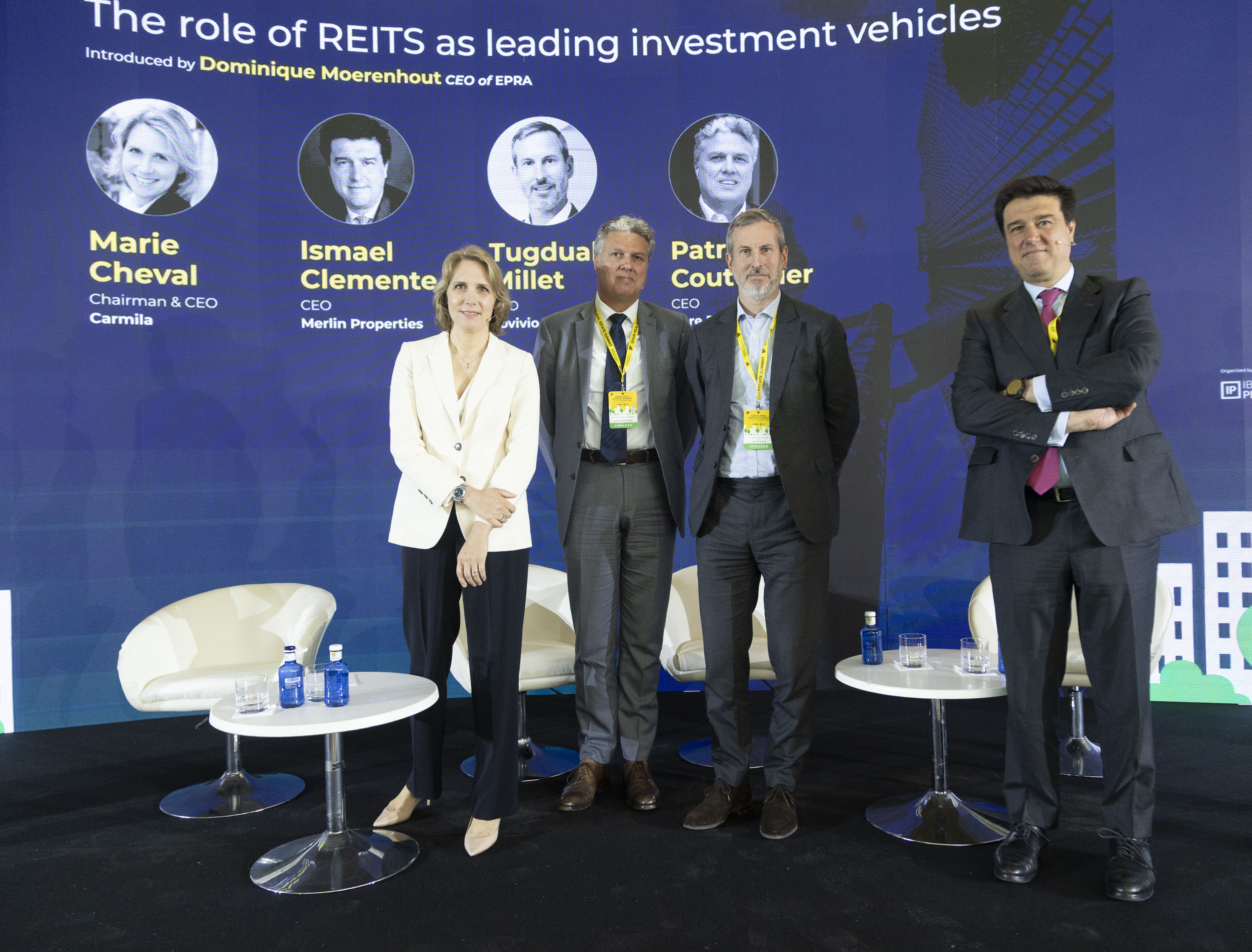
Patrick Couttenier outlined Care Property Invest’s position in healthcare infrastructure and care homes, with a portfolio worth €1.4 billion across four countries. The company began operations in Spain in 2020 with a €120 million portfolio, in a sector which, according to the executive, boasts high occupancy rates and growing demand linked to an ageing population. Patrick Couttenier argued that, even in times of greater uncertainty, this type of asset offers stability due to the recurring nature of care needs and the generation of sustained cash flows.
In the case of Merlin Properties, Ismael Clemente noted that the company is listed in Spain and Portugal and maintains a diversified portfolio across logistics, offices, shopping centres and data centres, a segment he identified as its main growth driver. The CEO noted, however, that data centres present significant capital barriers, ever-increasing technological demands due to the development of artificial intelligence, and a certain degree of market scepticism following years of announcements that have proved difficult to deliver. Added to this, in Europe, is a heavier bureaucratic burden.
The debate also addressed the differences between European and US REITs. The participants agreed that Europe is characterised by greater risk aversion, a more savings-oriented investment culture, a smaller scale and a more complex regulatory framework – factors that make it more difficult to raise capital compared to the US market. Ismael Clemente emphasised that regulation even limits the possibility of developing REITs specialising in certain segments, such as rural land, car parks or telecommunications towers, while Marie Cheval highlighted the impact of taxation as an additional barrier to investment.
Despite these limitations, the panel concluded with a positive outlook on Europe’s ability to attract more capital, although part of that investment will be determined by capital expenditure needs and the selection of assets capable of combining scale, liquidity and stability. Looking ahead to the rest of the year, participants highlighted asset prices and geopolitical stability as two key factors to monitor.
Retail and logistics seek selective opportunities in Spain
The parallel session dedicated to retail and logistics examined the performance of both sectors at a time when investment opportunities are reopening, with a focus on prudence, disciplined capital allocation and the search for locations with solid fundamentals. The panel was chaired by Tom Waite, Director of Industrial and Logistics Investment, International Capital Markets EMEA at JLL, and Sandra Ludwig, Head of Retail Investment EMEA at JLL, with Karoline Nader-Gräff, Deputy Director of Global Expansion and Development at Ingka Centres; Manuel Ibáñez, Head of Real Estate Iberia at DWS; and Fernando Ramírez de Haro, Head of Spain and Portugal at Savills IM.
Logistics was described as one of the major property sectors at European level, although the picture is more nuanced for Spain. In the Spanish market, as discussed during the session, investment appeal remains more heavily concentrated in retail, offices and residential, while the logistics segment offers more selective opportunities. Some strategies are geared towards core and core-plus assets in Madrid, Barcelona and Valencia, with the possibility of venturing beyond the main markets where location, asset quality and liquidity permit.

Karoline Nader-Gräff explained that Ingka Centres has made acquisitions worth €3 billion, including in markets such as China and India, in line with Ikea’s expansion. She stated that the company’s focus is on core assets in major European countries, as well as India and North America, and noted that the aim is to maintain the current level of investment over the coming years. In the case of Spain, she noted that entry must be analysed more selectively, as markets such as Germany offer more attractive returns, meaning the company would only consider certain transactions linked to Ikea’s presence.
Fernando Ramírez de Haro pointed out that Savills IM has a specific fund in Europe and acknowledged that activity in Spain has been more limited due to fierce competition from private investors. In Portugal, the firm has acquired a portfolio of supermarkets, while in Spain it has channelled its exposure through agreements with developers. The executive defended, however, the need to increase exposure to the Spanish market, particularly in formats with stable demand and the capacity to generate recurring income.
Manuel Ibáñez highlighted the strong operational performance of the assets, with a 5% increase in visitor numbers and a 10% rise in sales, and noted that the adjustment in yields has opened up an opportunity for buying. In his view, some investors have been able to capitalise on opportunities because they had the capital and the ability to read the market at the right moment. He also highlighted that Spain offers a competitive balance compared to other countries, although he cautioned that in certain areas, such as the Corredor del Henares or Valencia, it does not seem necessary to add more retail space without a precise understanding of demand.
The session also addressed the reuse of underutilised spaces and the evolution of retail formats. Karoline Nader-Gräff explained that Ikea has a broad property portfolio and that some locations have space that can evolve from single-tenant models towards multi-tenant configurations. On this point, she mentioned Decathlon as a complementary operator within certain retail schemes.
In her closing remarks, Sandra Ludwig noted that Spain appears to be a more attractive market for retail investment than other European countries, underpinned, among other factors, by GDP growth. At the same time, she pointed out that it is a more expensive market than Germany, albeit one with solid fundamentals, projected rental growth and falling unemployment rates. As an example of the sector’s dynamism, she cited the case of Islazul, which has been traded twice in the last 24 months, a transaction that reflects both the adjustment in yields and the investment activity seen in the Spanish market.
Overall, participants agreed that Spain presents positive dynamics due to demographics, tourism and consumer behaviour, but they also noted that investment requires discipline and a detailed analysis of each location. A generalised situation of oversupply is not anticipated, although tensions may arise in specific areas due to the entry or repositioning of operators. In the final part, when asked which segment they would target for their purchases, Manuel Ibáñez favoured offices and Fernando Ramírez de Haro favoured supermarkets.
Healthcare and senior living: stable income with development challenges
The session on healthcare and senior living was chaired by Nuria Ochoa, Senior Director of Healthcare and Life Sciences at CBRE, and featured as co-chairs Valerie Hernández, Investment Director at Wellder Senior Assets Socimi (Renta Corporación/APG); Felipe Pérez Agustín, Head of Spain at Praemia REIM; and Miki Domenech, Asset Value Director at Healthcare Activos.
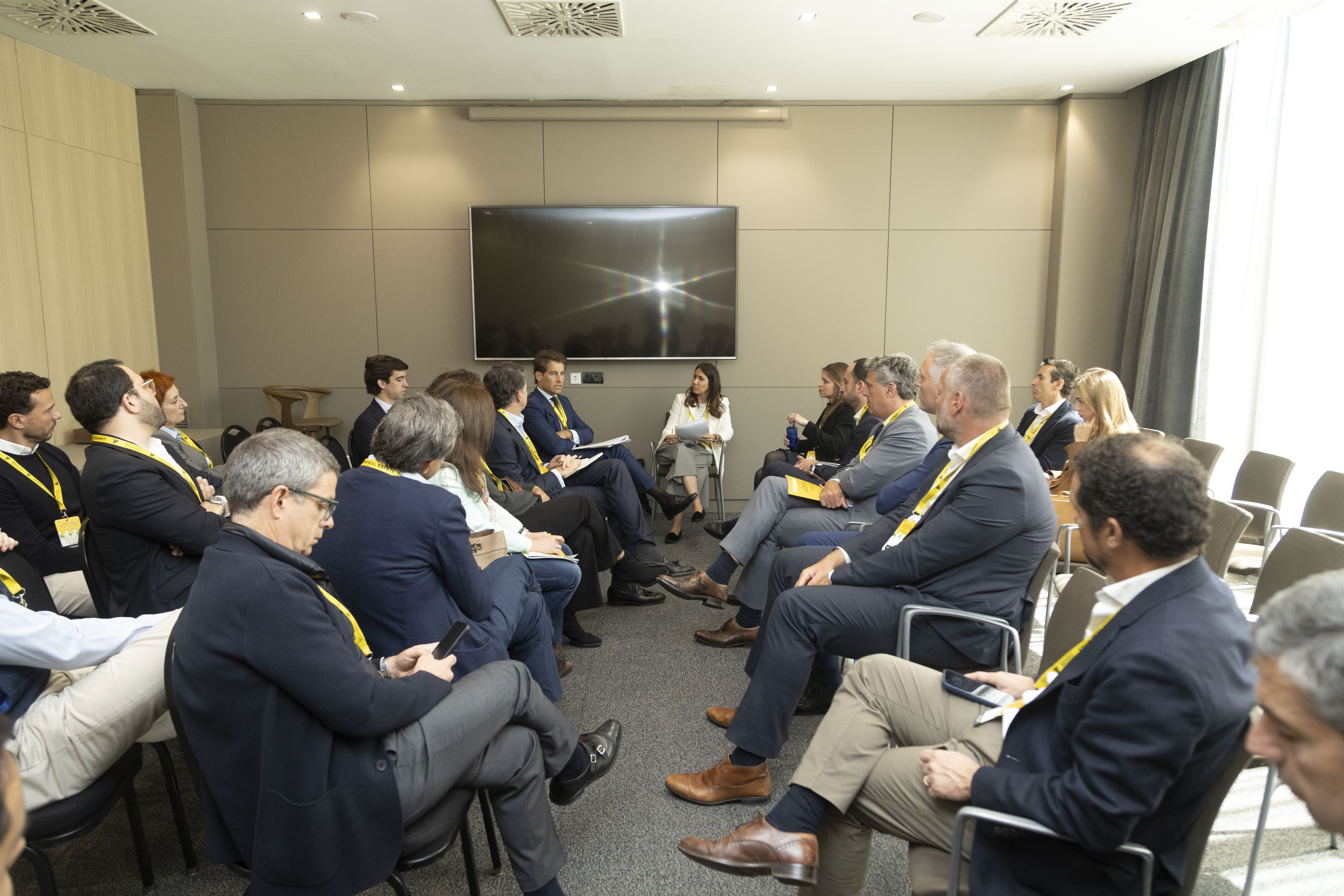
In her closing remarks, Nuria Ochoa noted that Spain offers advantages over other European markets, particularly in terms of yields and prices. The sector, however, also faces challenges linked to costs and the complexity of development, factors that constrain the creation of new supply.
The session highlighted healthcare and senior living as a segment that combines long-term social impact with stable income, against a backdrop of increased investor focus on assets linked to an ageing population and the provision of care services.
Offices: investor sentiment improves, but has not yet returned to pre-Covid levels
The office session was chaired by Juan Barba, Senior Advisor at B Living (Grupo Barba), with Robert Cordesmeyer, Senior Investment Manager for Southern Europe at Union Investment RE; Pedro Coelho, Partner at Square AM; Asier Uriarte, Investment Director at Izilend; and Gabriel Cabello, Partner at Clifford Chance, serving as co-chairs.
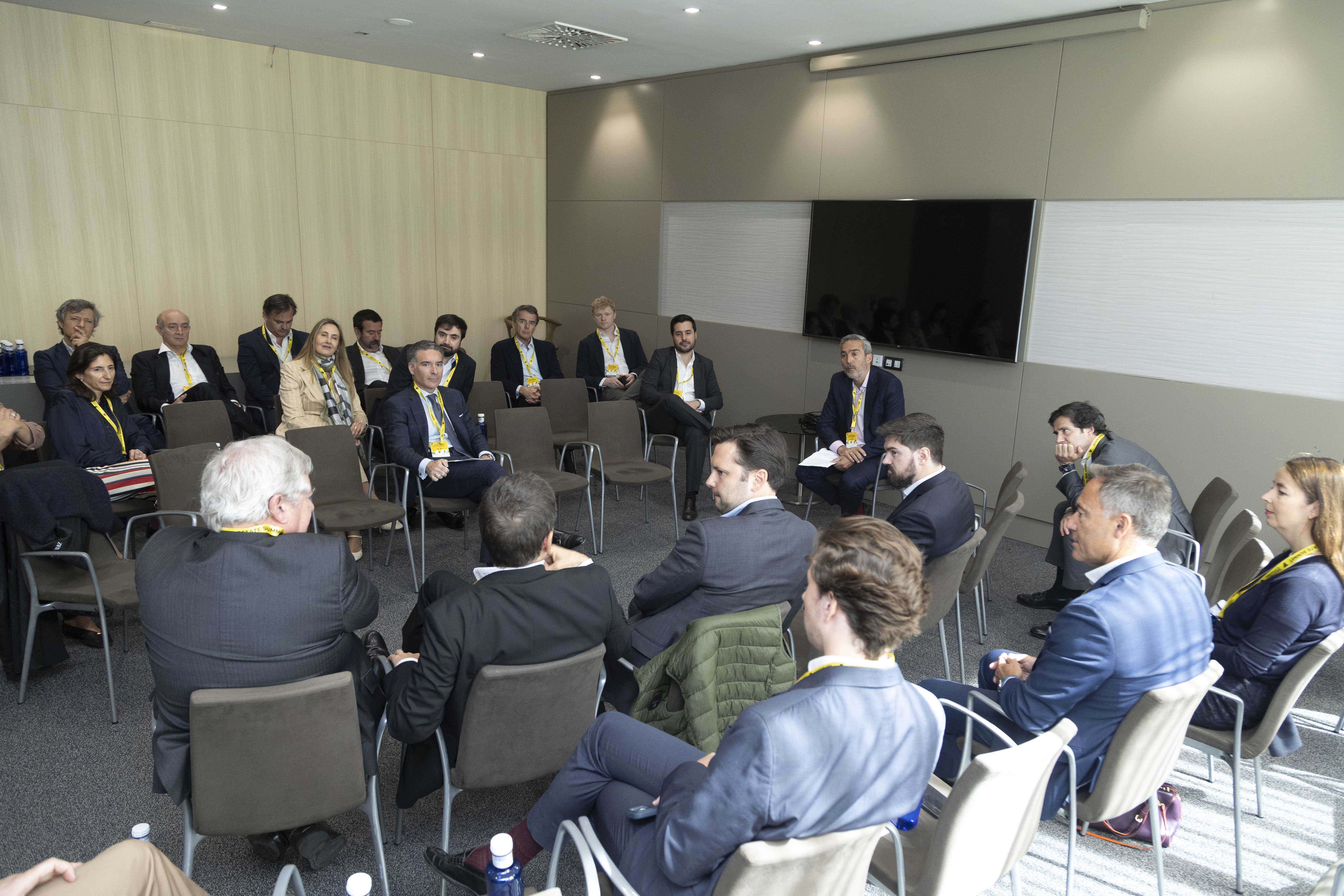
In his closing remarks, Juan Barba highlighted the strong performance of the Iberian office market, where demand for high-quality space exceeds supply in the three main cities. However, he also noted that the perception of offices as an investment asset class has not yet fully returned to pre-Covid levels.
As he explained, the market is in a more favourable position than it was two or three years ago, with a more positive outlook among investors, although interest in this segment remains more selective than in previous cycles.
Data centres: the challenge shifts from location to available power
The session dedicated to the data centre and digital infrastructure sector identified energy availability as the key deciding factor for the development of new projects. Chaired by Francisco Porras, Head of the DC Business Unit at Merlin Properties, the session featured Andrew Jay, Head of Data Center Solutions at CBRE; Javier Pemán Pérez-Serrano, Higher Education and Research Sales Manager at NVIDIA; and Sergio Solivera, Global Nokia Alliance Leader and Telco Partnerships at Nscale.
Francisco Porras summed up the shift in the sector’s thinking by pointing out that, while for years the property sector has been governed by the maxim “location, location, location”, in the case of data centres the new mantra is “power, power, power”. The challenge is no longer simply a matter of finding land, but of identifying sites with sufficient electrical power, the necessary licences, and the capacity to accommodate increasingly large and demanding infrastructure.
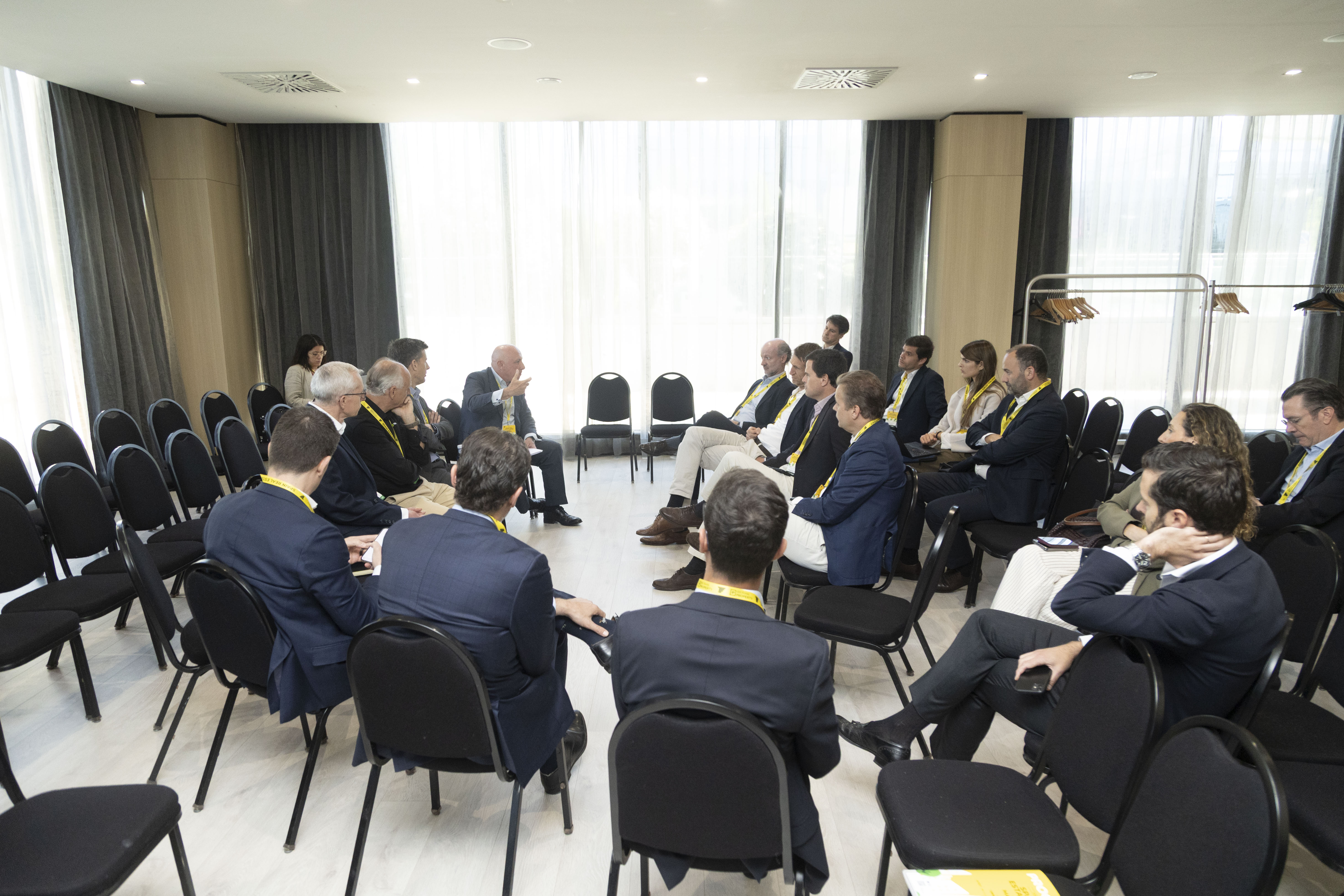
Sergio Solivera emphasised that infrastructure linked to artificial intelligence is very different from traditional industrial facilities. Its development requires intensive prior planning, particularly regarding energy and cooling, and a modular design that allows the asset to grow in line with technological developments. In this sector, he warned, obsolescence stems not so much from the building itself as from the lack of flexibility in the infrastructure.
Javier Pemán Pérez-Serrano noted that authorised capacity should not always be interpreted as an absolute limitation, as there are business models for different scales. In this regard, he explained that certain single-tenant projects, such as those intended for banks or other large users, can meet specific needs without necessarily relying on larger-scale schemes.
Andrew Jay, for his part, emphasised the importance of defining the intended use of each piece of infrastructure from the outset, whether for language models, artificial intelligence, cloud computing or other digital services. Failing to do so, he explained, can result in a lack of specialisation of the asset and a high financial risk.
In the session’s conclusions, Francisco Porras argued that it will be necessary to create more digital infrastructure of all kinds and in different locations, as demand will continue to grow strongly over the coming years. Advances in language models and artificial intelligence will require data centres that differ from traditional ones, with greater energy capacity, more technical specialisation and planning adapted to a rapidly changing market.
Madrid: major developments and integrated neighbourhoods
The session “Madrid: Europe’s centre of Mega Developments” was chaired by Patricia Gross, Business Development Manager for Spain at Sonae Sierra, and featured as co-chairs Sara Aranda, Director General of Urban Planning for the Community of Madrid; Miguel Hernández, Director of Strategy and Corporate Development at CREA Madrid Nuevo Norte; Luis Roca de Togores, Chairman of Valdecarros; and Carolina Roca, President of Asprima.
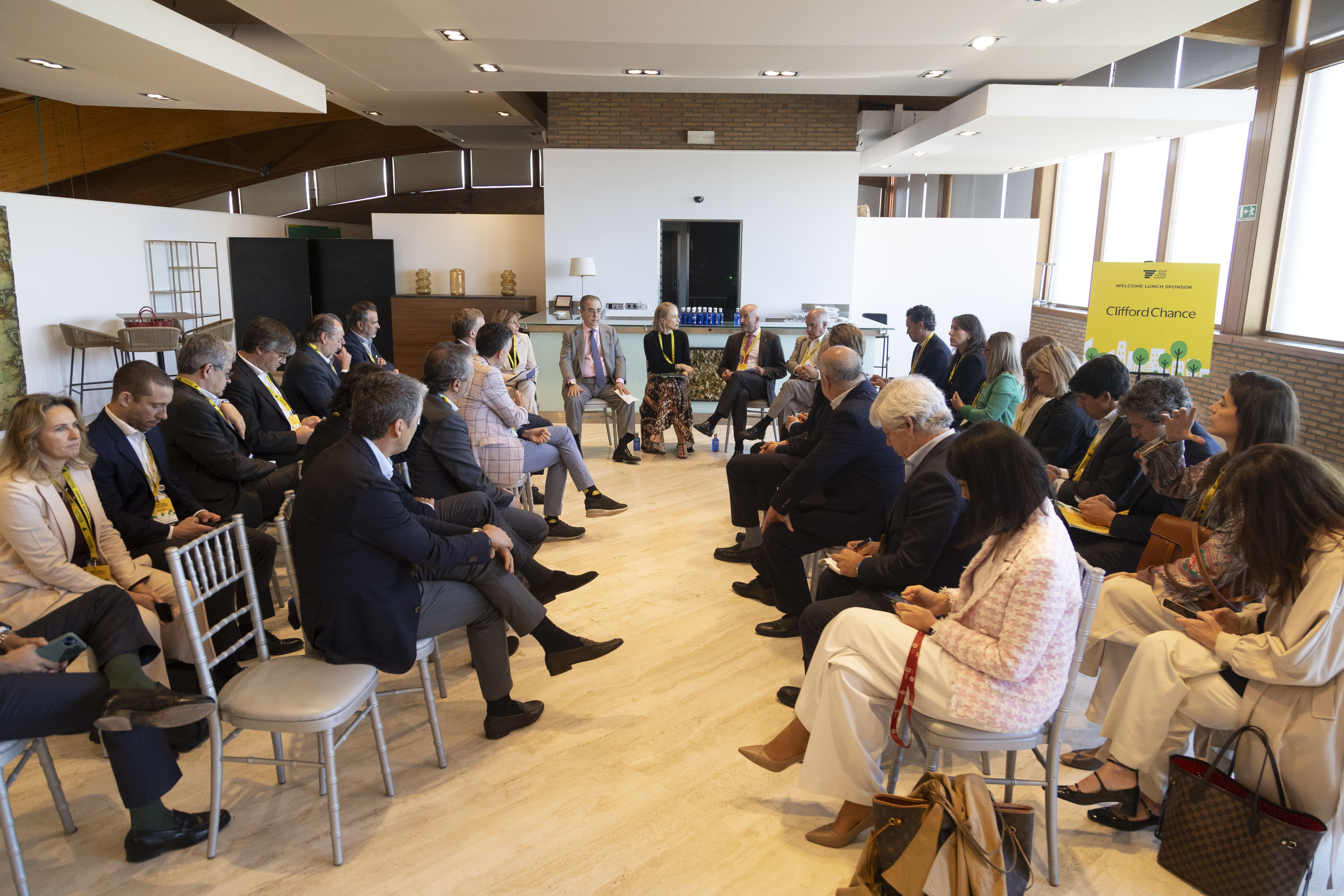
Gross summed up the session with a key point: Madrid continues to show strong momentum in large-scale property development. The panel focused on the private sector’s confidence in the public sector and on the kind of city being built, with projects that go beyond simply adding more housing to create integrated neighbourhoods combining residential use, services, retail, offices and other facilities.
The conclusion was that Madrid is not only growing, but is demonstrating that large-scale property development can proceed with agility and prove attractive to investment, provided it combines urban planning, public-private collaboration and mixed-use development.
Living: operation, scale and flexibility mark the residential convergence
The session “Living. From flex to multifamily” analysed the convergence between flex living, co-living, PBSA and traditional multifamily, in a context where the boundaries between formats are becoming less rigid. It began with a keynote speech by Laurent Ternisien, Deputy CEO of Investment Management and CEO of Luxembourg at BNP Paribas REIM, before giving way to a panel of investors moderated by Richard Betts, Conference Chairman and Co-founder and Head of Content at Real Asset Media, featuring Carlos Zucchi, Managing Partner and CEO of Argis; Carlo Matta, CEO of Nido; and Laurent Ternisien himself.
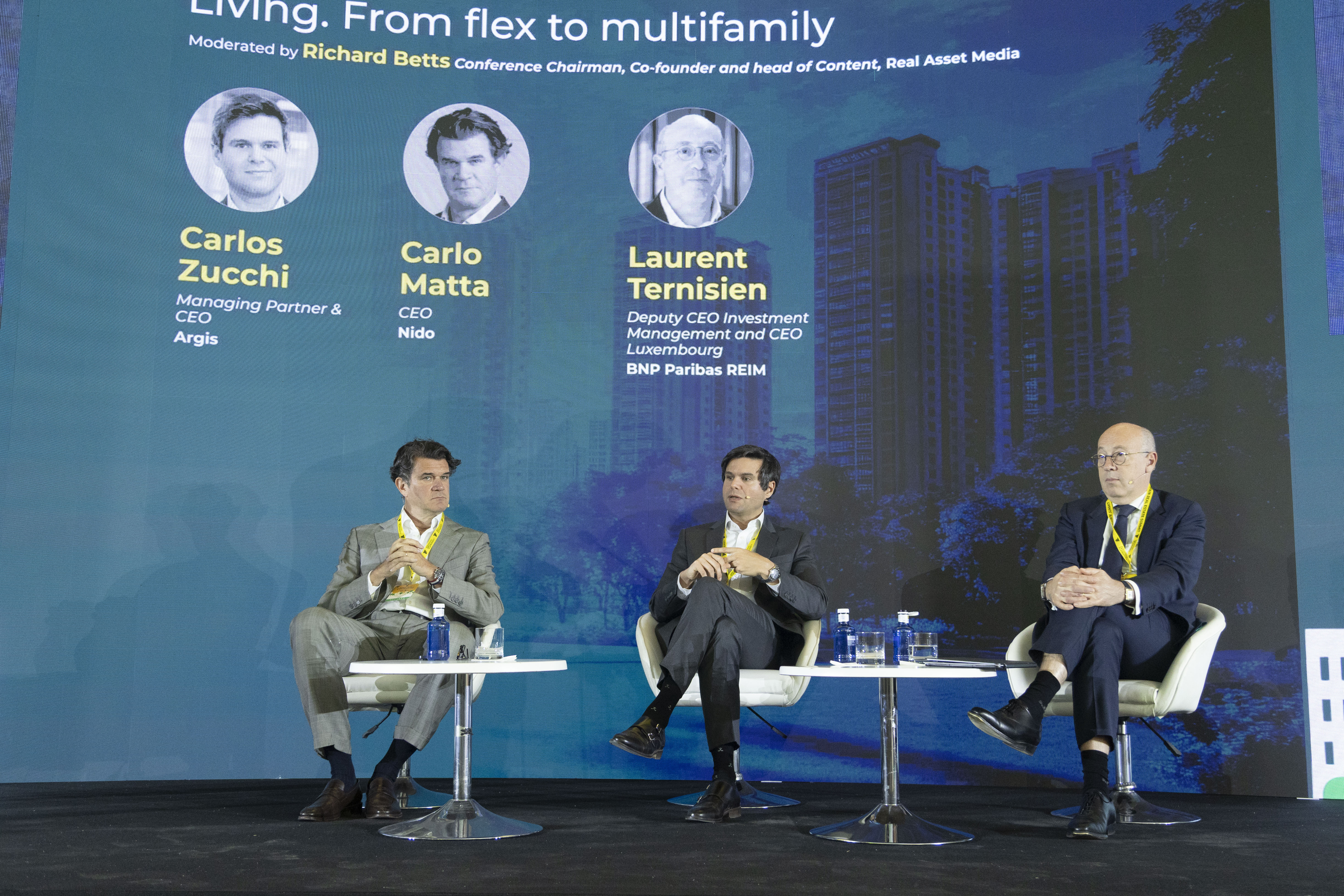
The starting point was the size of the residential rental market in Spain. Although the country has a lower proportion of tenant households than other European markets, there are 2.9 million families living in rented accommodation, of whom 526,000 are in Madrid, 523,000 in Barcelona and 142,000 in Valencia. In this context, residential property was presented as an asset class capable of supporting people through different stages of life and opening up investment opportunities across formats with varying levels of risk, return and operational specialisation.
During the session, it was noted that flex living can offer a higher potential return, but also involves greater risk and increased complexity in underwriting. One of the trends identified is that some investors are no longer simply buying the property asset, but are also taking stakes in the operator, a decision that reflects the growing importance of management in value creation.
Carlo Matta argued that the operation is key to maximising the value of the property asset, particularly in flex living, where a good operator enables costs to be controlled, services to be tailored, and the data generated by the management itself to be used to analyse future investment opportunities. In the same vein, Carlos Zucchi noted that scale is a second fundamental element, as the temptation to project higher revenues can be accompanied by higher costs as well, which requires maintaining a balance between expected profitability and operational structure.
The panel also addressed the convergence between PBSA and flex living in terms of services and facilities. Although the degree of sophistication varies depending on the segment and the customer profile, the participants agreed that the foundations of both models tend to be converging. Laurent Ternisien added that flexibility is not a static concept, as it changes over time depending on how residents’ uses and needs evolve.
Carlos Zucchi illustrated this transformation using the example of residences in Spain, where ground-floor spaces designated as canteens have lost importance due to changing consumption habits and the growth of platforms such as Uber Eats. This type of evolution requires a review of the design and allocation of space within the properties.
The PBSA was described as an established sector capable of attracting new waves of capital, while flex living was presented as an attractive asset class but one that is still not fully understood by some risk-averse investors. The main challenge, it was argued, lies in the supply: many existing or under development assets are situated on commercial or hotel land, which means they compete with office or hotel projects. Despite the evolution of these formats, the panel agreed that location remains a fundamental factor in identifying good investment opportunities.

