Catalonia’s logistics sector is increasingly being viewed as essential economic infrastructure, rather than simply a source of warehouse space. That was one of the central conclusions of an Investor Talk conducted by Iberian Property at Expo Real 2026, where Luis Poch, Head of Business Development and Leasing at P3 Logistic Parks Spain, and Juan Antonio Irala Guzmán, Development Manager Iberia at Panattoni, discussed the region’s competitive advantages, the pressure on available land and the prospects for further development along the Mediterranean corridor.
The region’s combination of the Port of Barcelona, export-oriented industry and access to Iberian and European transport networks continues to underpin its appeal. For Irala Guzmán, ongoing investment in the port and public-sector urbanisation works provide grounds for confidence in the market, while e-commerce remains a powerful source of occupier demand. These fundamentals are supporting continued activity even as development becomes more complicated and competition for suitable land intensifies.
The tightness of the market is reflected in its vacancy rate. Poch put logistics vacancy in Catalonia at around 3%, a level that supports expectations of further rental growth. He also pointed to approximately 350,000 sqm of space having disappeared from the market in recent years, against a backdrop of booming take-up. The result is a market where access to the right product, in the right location, remains a decisive factor for occupiers and investors alike.
However, the scarcity of available space is also changing the geography of development. The Barcelona metropolitan area’s first ring remains the preferred location for many operators, given its proximity to population centres, infrastructure and labour. Poch was clear that, if conditions allowed, the focus would remain concentrated there. That does not mean opportunities are absent elsewhere, but secondary locations need to offer a discount in value to compensate for their additional risks.
For developers, this requires a more tailored approach. Both panellists said they remain comfortable pursuing speculative development in Catalonia, and that the region’s fundamentals make it relatively straightforward to present investment opportunities to their respective investment committees. Yet outside the first ring, risk management becomes more important: schemes may need to be smaller or adapted to the requirements of local occupiers rather than replicating the scale and specification of projects in prime locations.
The discussion also highlighted how logistics now present requirements similar to those needed for data centres, which can compete for the same land and depend on access to energy and grid capacity. Irala Guzmán identified power availability, connectivity and licensing as increasingly important considerations for development decisions. In some cases, land may be designated for industrial use but not permit logistics activity without a change to the applicable urban planning framework. The resulting delays and lack of flexibility can complicate projects even where demand is clear.
This points to a broader challenge for Catalonia’s long-term competitiveness. Infrastructure is not limited to roads, ports and rail connections; it also includes power capacity, utility networks, planning certainty and the public works needed to make land development-ready. Where these elements lag behind demand, the constraint is no longer simply a shortage of buildings, but the ability to bring suitable new supply to market.
The economic case for choosing the right location was also central to the discussion. Alexandre Lima, Director of Iberian Property and moderator of the session, noted that rent remains a relatively small component of an occupier’s overall operating costs, while transport can represent a far greater expense. In a low-margin logistics business, an apparently cheaper location can become significantly more expensive if it adds distance to daily distribution routes. Given the current macro environment and pressure on fuel prices, at 50 trucks a day, an additional ten kilometres per truck would translate into around €260,000 in annual operating costs.
The implication is that lower rents do not necessarily make a secondary location more competitive. If a site materially increases transport costs or undermines operational efficiency, the savings on rent may be outweighed by the wider cost of running the business. Conversely, a well-connected location can justify a higher rental level when it delivers measurable efficiencies across the occupier’s operation. For investors and developers, this makes the quality of a location’s infrastructure and its relationship with the occupier’s distribution network central to the investment case.
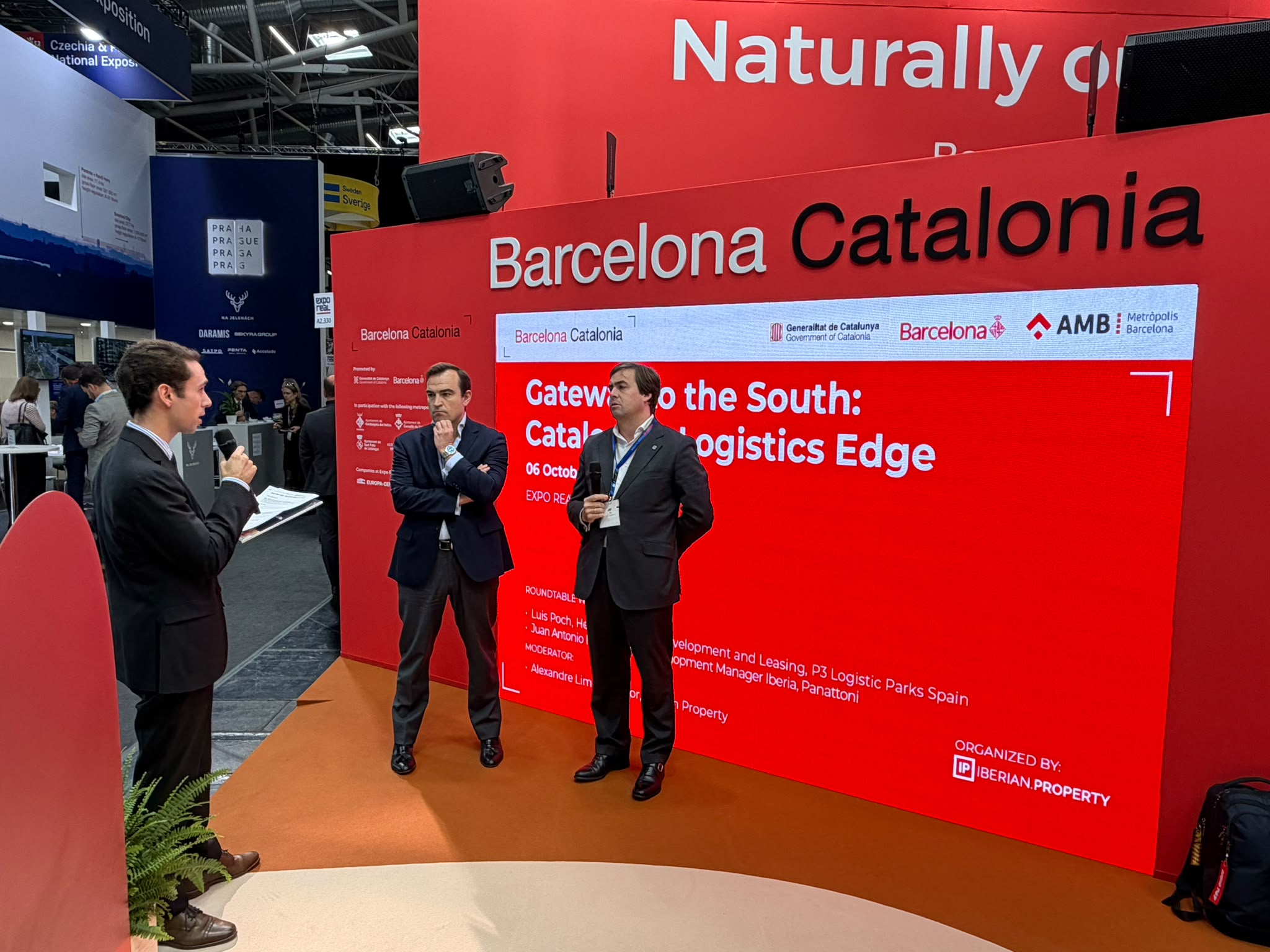
The opportunity is not confined to the established metropolitan core. Secondary corridors can absorb some of the demand that cannot be accommodated in the first ring, provided that land values, connectivity and the scale of development are aligned with the needs of occupiers. In this increasingly selective market, the challenge is not simply to build more warehouses, but to develop the right logistics infrastructure in the places where it can support the wider economy.
Catalonia’s logistics advantage remains substantial. Whether it can extend that advantage over the coming decade will depend on how effectively public authorities, developers, investors and infrastructure providers respond to the pressures created by the region’s own success.