


Swiss wealth manager 1875 Finance plans to invest between €500 million and €800 million in a mega-development comprising around 1,400 homes on an area of approximately 28 hectares between Marvila and Beato in Lisbon, after the relevant Implementation Unit was approved by the City Council last April, according to Jornal de Negócios.
The project is being developed by Floris Marvila, a company that owns half of the 12 plots covered by the development, corresponding to over 70% of the land. The project is being carried out in coordination with Lisbon City Council and Infraestruturas de Portugal, which own 21.2% and 6.6% of the land involved, respectively.
The project envisages the creation of around 1,400 homes, including social and affordable housing, organised into four distinct areas: Açúcar, Polu, Beato and Madre Deus. Each will have its own identity, but all will be linked by a central park, squares, courtyards and green corridors designed to create continuity between the new development and the surrounding neighbourhoods.
The proposed layout provides access to various parts of the area, pedestrian and cycle routes, continuity with the riverside frontage, and a link to the future Marvila station. The park is also set to include areas for sport, leisure, urban gardens, events and community activities.
The plan also includes public facilities, such as a day centre and a care home, as well as spaces for retail and services.
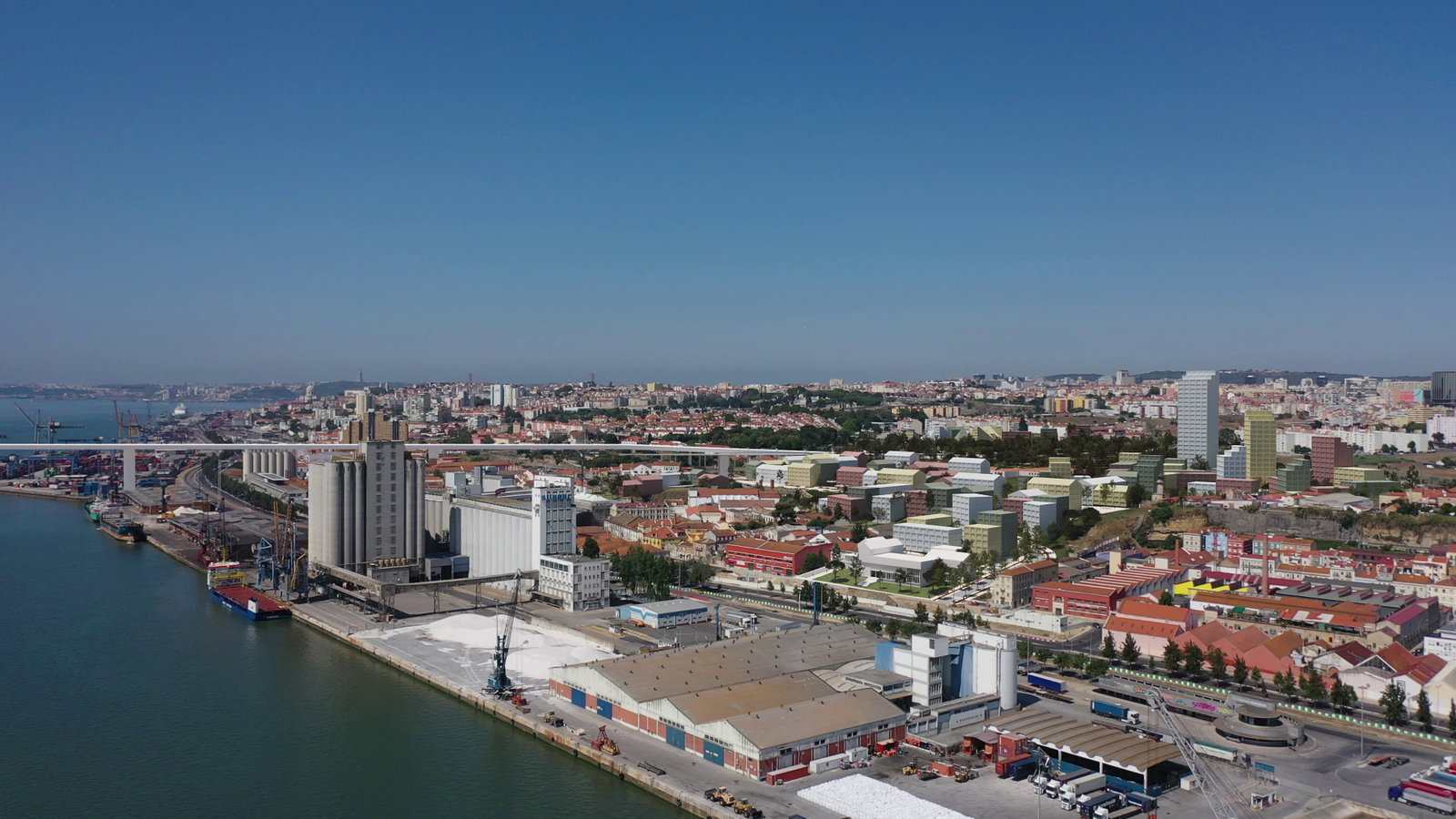
The urban development project is being led by a multidisciplinary team comprising the Porto-based architecture firm OODA and the Dutch firm MVRDV. The proposal seeks to combine new construction, public space and the preservation of existing heritage in an area of the city marked by former physical barriers and the presence of railway infrastructure.
Among the heritage and cultural elements integrated into the project are the Convento do Beato and a century-old rubber tree, which is set to become the focal point of a new public square.
Following its expected approval at the Execution Unit phase by Lisbon City Council, the next steps include the Environmental Impact Assessment, urbanisation works and land subdivision, establishing the framework for the transformation of the area to move forward.
“A project of this scale is always a long-term commitment to a place and its people. What we set out to define was not just a plan, but a structure resilient enough to evolve, one that will serve Lisbon well beyond the first phase of development”, said Rodrigo Vilas-Boas, founding partner at OODA.

