Portugal’s real estate market has spent much of the past decade moving between two very different perceptions. For some international investors, it was once a relatively undiscovered market where pricing, limited competition and strong underlying demand created opportunities that were increasingly difficult to find elsewhere in Europe. For others, its smaller scale and comparatively shallow liquidity have remained structural constraints. As the cycle has turned, the question for investors is no longer simply where prices have fallen, but whether the underlying fundamentals justify putting capital to work.
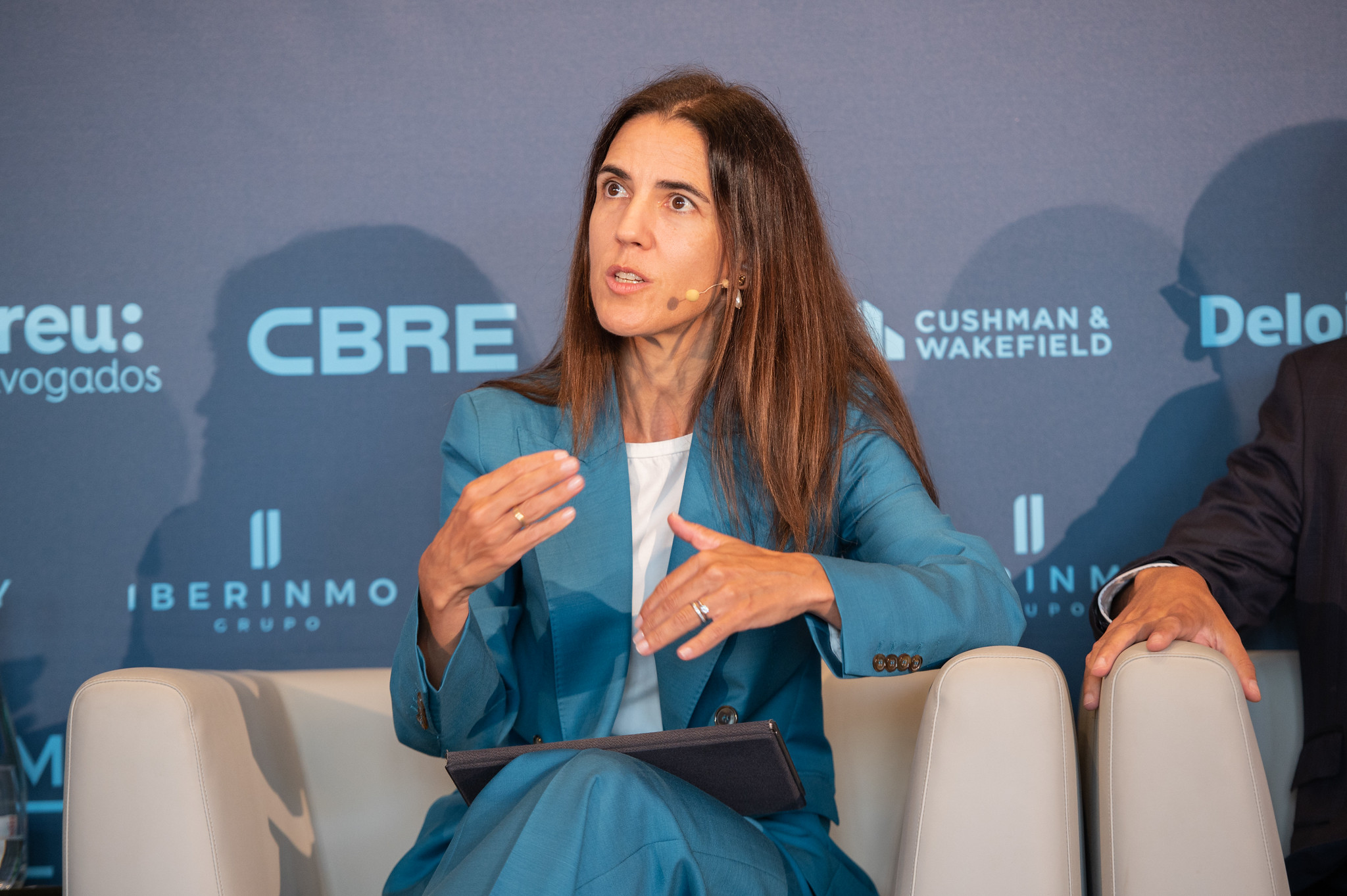
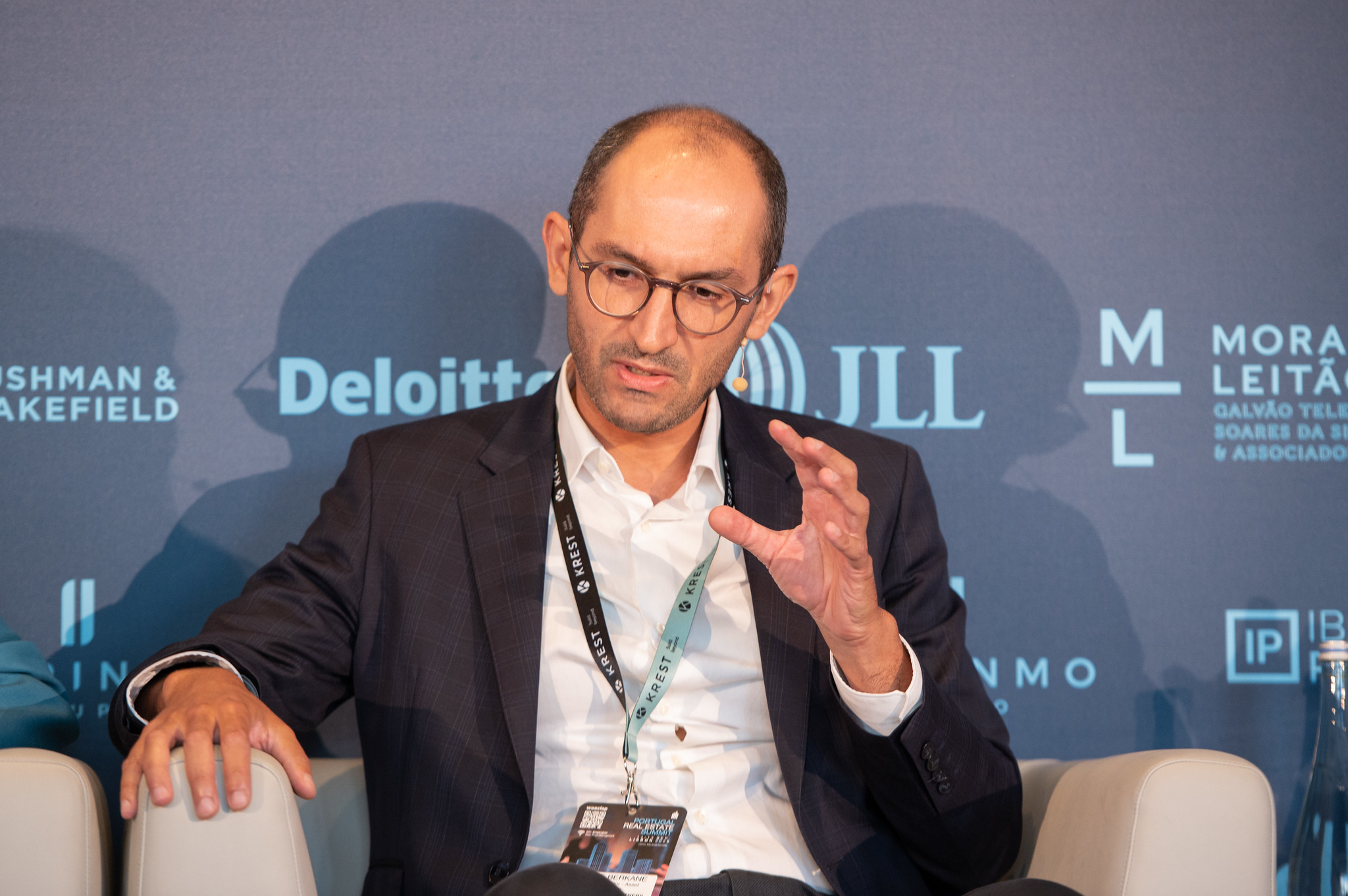
That distinction was at the centre of the “The Ugly Ducklings and the Swans: the Iberian cycle” round table at the 10th edition of the Portugal Real Estate Summit, organised by Iberian Property and held at the Hotel Palácio Estoril on 14–15 September, where Vanessa Gelado, Senior Managing Director and Head of Southern Europe at Hines, Yassine Berkane, Managing Director at Tristan Capital Partners, and Colman McCarthy, Partner at Signal Capital Partners, discussed how international investors are navigating Portugal and the wider European cycle.
When an entire sector falls out of favour, how can one tell if it is broken, or simply too cheap?
For Hines, the starting point is to separate market sentiment from the fundamentals of the underlying real estate. Vanessa Gelado pointed to the firm’s major investment in Spanish retail, including its 2024 takeover of Lar España, as an example of a situation where capital markets sentiment and the operational fundamentals of the assets had diverged significantly. The same discipline, she argued, applies when assessing opportunities in Portugal: investors need to look beyond the headline repricing and examine supply and demand, rental growth, occupier requirements and, ultimately, the individual properties.
“Location, location, location” remains relevant, but Gelado’s framework extends well beyond geography, encompassing asset quality, sustainability and operational performance. The important caveat is that repricing in itself does not constitute an investment thesis. A cheaper sector can still be fundamentally impaired, while the return of liquidity from both debt and equity markets ultimately depends on investors demonstrating that the underlying fundamentals are genuinely there.
For Portugal, that distinction is particularly relevant as capital begins to revisit sectors that were previously regarded with caution. The question is not simply whether an asset is cheaper than it was several years ago, but whether its income, occupier demand, supply constraints and long-term positioning provide a credible basis for value creation.
If the same risk-adjusted return existed elsewhere, would investors still choose Portugal?
Colman McCarthy offered perhaps the clearest explanation of why Portugal became such an important market for Signal Capital Partners. When the firm began investing in Lisbon, there was relatively little international capital active in the market, allowing a comparatively small investor to establish relationships and build a reputation much more quickly than would have been possible in larger European cities such as Madrid, Milan or Paris.
The experience also illustrates one of the paradoxes of investing in Portugal. The characteristics that can make the market attractive on the way in — limited competition, comparatively little international capital and opportunities to establish strong local relationships — can become constraints when investors eventually seek liquidity. Signal has successfully exited office investments with tickets over €100 million in Lisbon, but McCarthy acknowledged that the market for its current prime assets is very different.
The firm now owns two highly core, centrally located office buildings, and the lack of institutional liquidity for that type of product has become a factor in its investment strategy. For McCarthy, however, the answer is not necessarily to sell into a thin market. The ability to extend the duration of its funds provides time to wait for liquidity to return, rather than becoming a forced seller.

Betting on the city — or simply buying below replacement cost?
Tristan Capital Partners entered Portugal in 2019 with its Vision office portfolio, following around two years of work by its team to identify the right opportunities. Yassine Berkane described a combination of factors behind the investment thesis: falling vacancy, a lack of institutional CapEx investment in Lisbon’s office stock and a basis that was attractive relative to the quality of the underlying assets.
The important point, however, was that low pricing alone was not sufficient. Tristan needed conviction in Lisbon itself and in its ability to execute a business plan with local operating partner Norfin. In the Vision portfolio, the opportunity was to take assets that were already around 95% occupied and extract further value through rental reversion and relatively targeted investment in the buildings.
The results illustrate the scale of the opportunity that existed in the earlier cycle. Tristan increased the portfolio’s NOI by around 50%, helped by leasing space at higher market rents and relatively modest CapEx interventions, including improvements to lobbies and lifts and obtaining building sustainable certifications. Berkane also highlighted the structure of lease expiry in Portugal as an advantage for landlords seeking to capture rental reversion: when an occupier is paying significantly below market, the expiry of the lease can provide a clearer opportunity to reset the rent than in some other European markets.
The strategy was also helped by the granular nature of the portfolio. The assets were relatively small, well-located CBD buildings with floor areas of around 2,000–3,000 square metres, allowing Tristan to build liquidity on an asset-by-asset basis rather than relying exclusively on a large portfolio transaction.
When liquidity disappears, how long can investors afford to wait?
Signal’s current office position illustrates the other side of the cycle. McCarthy said the firm’s two Lisbon assets are among the most prime buildings in the city and were responsible for achieving some of the market’s record office rents, at around €32–35 per square metre. The investment thesis now depends partly on allowing the occupier market and the wider development pipeline to catch up with those rental levels.
Signal deliberately adopted a patient leasing strategy because it believed the quality and location of its buildings justified the rents required to occupy best-in-class space. As tenants fit out their offices and other new developments enter the market at similar rental levels, the benchmark for prime space continues to move upwards.
The problem is that the investment market has not necessarily moved at the same speed. There is currently a shortage of core institutional capital willing to acquire these assets at the required pricing, creating a disconnect between the quality and income potential of the buildings and their immediate liquidity. Rather than accept that discount, Signal has increased leverage against the assets and retained the option to extend its fund duration.
That is a useful illustration of how institutional investors can manage a cycle without abandoning the underlying thesis. The asset does not have to be sold simply because the original fund timetable says it should be. If income is growing, the building is becoming better positioned and the market is gradually re-basing at higher rents, time itself can become part of the investment strategy.
Can retail’s renewed appeal become a structural story?
Retail provides another example of a sector whose investment narrative has changed substantially. Vanessa Gelado pointed to three successive tests over recent years: the disruption caused by e-commerce, the pandemic and the combination of inflation and higher interest rates that subsequently pressured consumers.
The fact that quality retail has survived all three has changed the starting point for investors. Hines now sees an opportunity where constrained supply is combined with demographic growth and resilient consumer fundamentals. Even for core capital, Gelado argued, shopping centres can remain difficult to underwrite, but the pricing available in the sector can provide attractive cash-on-cash returns, particularly when compared with other real estate sectors. The critical variable remains supply.
What does conviction look like when the market turns?
For Tristan, the answer has increasingly been to concentrate on themes where supply and demand are visibly out of balance. Berkane identified logistics, and urban hotels as the standing out sectors for its particularly tight market conditions.
Tristan is seeing vacancy below 3% in Lisbon logistics, alongside the ability to reprice existing leases as occupiers face a market where suitable alternatives are limited. That does not mean every logistics opportunity is automatically attractive, but it reinforces the importance of looking at actual market fundamentals rather than relying on the broader investment narrative around a sector.

What would international investors have bought earlier?
Looking back at the last decade, the panel offered three very different examples of opportunities that could have been identified earlier.
For Hines, the lesson was the importance of portfolio diversification and the willingness to move away from traditional allocations. Gelado pointed to the firm's European core fund, where the portfolio in 2016 and even 2019 was still heavily weighted towards offices and retail. Through fundraising, disposals and new investment, the strategy pivoted towards logistics and living, while sustainability increasingly became an economic consideration rather than simply an ESG requirement. More efficient buildings can reduce service charges, support rental growth and ultimately affect valuation.
McCarthy's hindsight was more specifically Portuguese. He would have liked to identify the scale of the influx of US tourists and higher-value immigration into Portugal earlier, particularly in the Algarve. Signal's opportunistic capital model is designed around buying, creating value and exiting, whereas more patient capital can potentially capture longer-term demographic and tourism trends. He illustrated the point with a residential unit in Lisbon that Signal struggled to sell to domestic buyers, until an American client had a remote presentation of the €1.5 million-plus apartment and immediately purchased it.
For Berkane, the residential opportunity associated with Portugal's Golden Visa programme represented a possible missed window. Entering residential and navigating planning constraints is more complicated than some other asset classes, but with hindsight, he acknowledged that there had been significant value creation opportunities during that period.
But perhaps more important...what will investors wish they had bought in Portugal in 2026?
The answer from the three investors was notably less about picking a single sector and more about being selective within them.
Gelado sees increasing “bipolarity” across European real estate, with very different outcomes possible within the same broad sector depending on the quality of the asset, location, financing and eventual liquidity. Offices are returning in parts of Europe, but not offices indiscriminately. The same principle applies to retail and other sectors: the ability to refinance or exit remains an important part of underwriting, particularly in a market where debt costs and government bond yields continue to influence real estate pricing.
Berkane similarly stressed selectivity. Logistics fundamentals remain strong across Europe, but individual sub-markets can behave very differently, just as the contrast between prime CBD offices and weaker suburban markets in cities such as Paris demonstrates. In Portugal, however, he remains confident in the underlying logistics fundamentals.
McCarthy was more cautious about pricing. From an operational perspective, industrial and logistics would be among his preferred areas in Portugal, particularly given the combination of vacancy and future obsolescence that could create opportunities for investors capable of improving assets. From an investment perspective, however, he sees a much narrower margin for error because yields have already compressed significantly. If an investor buys an asset on the assumption of an exit yield in the low 5% range and that yield subsequently moves out by 50 basis points, much of the anticipated profit can disappear.
That distinction — between an attractive operational opportunity and an attractive entry price — perhaps best captures the panel's assessment of Portugal in the current cycle. The market can still produce compelling investment opportunities, but the days when simply finding a cheap asset was enough have moved further away. For international capital, the next phase is increasingly about identifying where Portugal's underlying supply, demand, rental and demographic fundamentals are strong enough to compensate for the market's relatively limited liquidity — and being prepared to hold the asset long enough for that thesis to play out.