

Over the past nine months, Aliseda has secured €2.4 billion in off-market property deals for more than 170 clients in Spain. Of this total, €460 million related to non-residential assets such as offices, hotels, logistics centres and retail parks. In many cases, these were properties located outside Madrid and Barcelona which, despite being situated in secondary markets, remained attractive to investors.
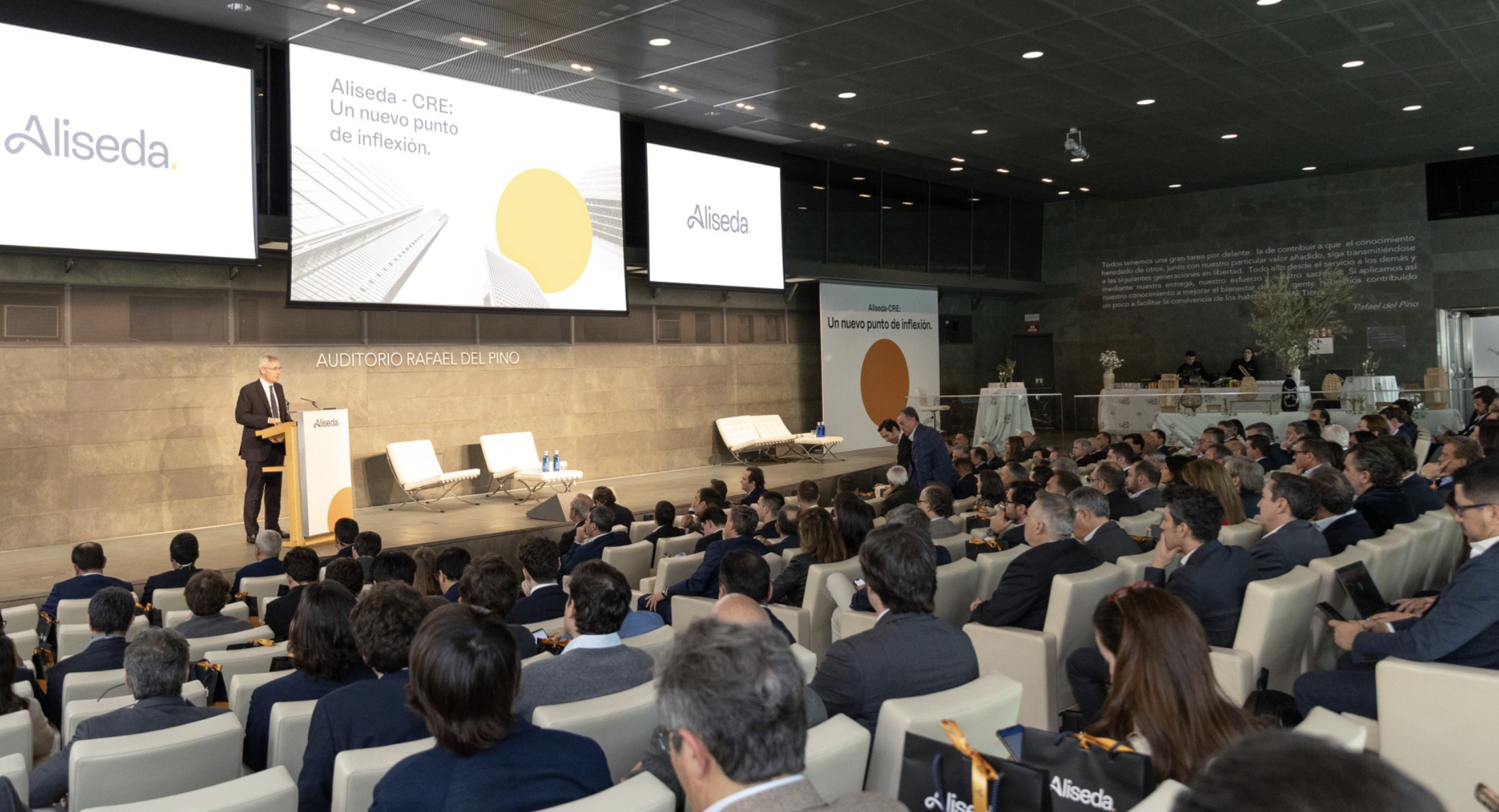
This was outlined at the conference “Aliseda-CRE: a new turning point”, an event held in Madrid at which the company highlighted the growing investor interest in the non-residential sector and its capacity to generate value opportunities across the country. The firm also presented itself as a comprehensive asset manager, supporting investors and developers in identifying opportunities for both profitability and repositioning and value creation.
Aliseda has a team dedicated to commercial property in the main markets and a sales network of 115 professionals for the management and marketing of assets throughout Spain. Furthermore, it is active in refurbishment through its subsidiary EFFIC, which specialises in energy consultancy for businesses and in the management of Energy Saving Certificates (CAE) for the commercial and residential sectors.
The macroeconomic context and pressure on housing and infrastructure
The session was opened by Íñigo Fernández de Mesa, Vice-President of the CEOE and Chairman of Rothschild in Spain, who provided a macroeconomic overview of the current situation and the key factors shaping the new property cycle in Spain at a time of high global uncertainty. He noted that the markets view the conflict between the United States, Israel and Iran as a short-lived episode. In this context, he pointed out that Asian stock markets, particularly in countries potentially affected by a possible closure of the Strait of Hormuz, remain buoyant despite the fact that 20% of global oil trade passes through that route.
Fernández de Mesa explained that this behaviour stems from the perception that most international players have an interest in the situation being brief, with the exception of Israel and, perhaps, Russia. In this context, he recalled that Donald Trump was facing the US mid-term elections in November and that a prolongation of the conflict would jeopardise the US’s planned investments in the Middle East. He also warned that an oil supply shortfall cannot be easily offset and noted that the recovery of production could be hampered by the shutdown of certain wells.
In his speech, he also explained that the United States is facing a deficit problem exacerbated by tax cuts and that its external financing is more complex than in the past, when a significant portion of its debt was held by China, Japan and Europe. As he explained, external support now falls essentially on Europe.
Regarding China, he noted that the country already produces value-added goods in sectors such as electric cars and the energy transition, and that its excess production is forcing it to seek overseas outlets. In his view, Europe needs to react swiftly in an environment of rapid change and reduce its dependence on the United States in areas such as payment systems, defence and energy supply, whilst forging links with other markets such as India and Mercosur.
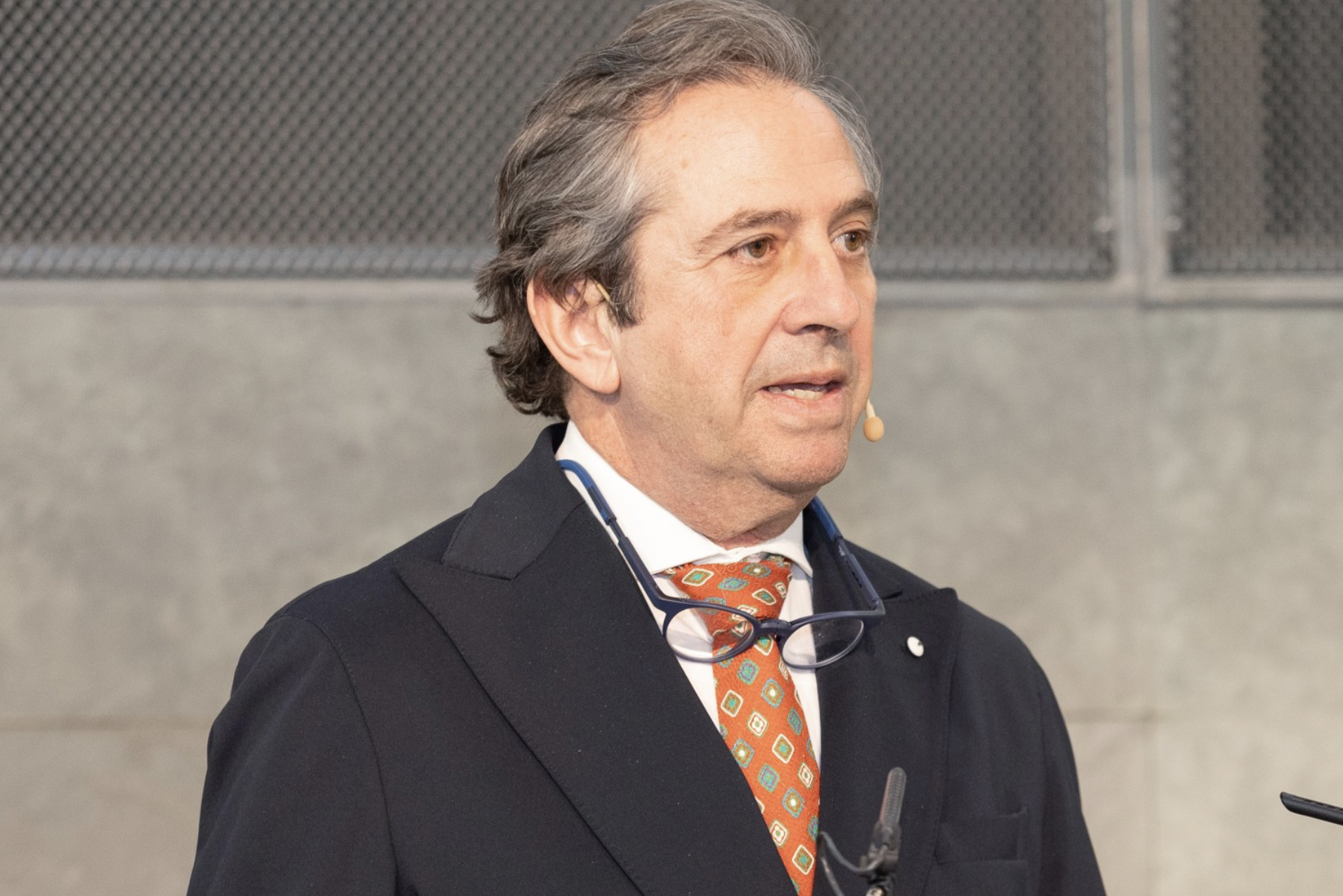
With regard to Spain, Fernández de Mesa maintained that the economy is “weathering the storm”, with growth of 2.8% supported by tourism, population growth, public spending and consumption. However, he warned that this performance should not mask structural weaknesses, as per capita income has not risen, nor has productivity. To reverse this situation, he emphasised the need to reduce absenteeism, which costs Spain €32 billion, and to increase investment, an area in which, in his view, the country has a significant shortfall.
In this line, he called for infrastructure to keep pace with GDP growth and put the investment needs for water and the rail system – particularly for medium-distance services – as well as for ports and airports, at 50 billion euros. In the private sector, he highlighted the lack of investment in distribution networks and housing. Regarding residential property, he insisted that there is a simultaneous problem of supply and demand, with expensive land, rising construction costs, few incentives for local councils and growing difficulties in accessing home ownership, particularly among younger people.
He also highlighted the taxation of housing in Spain, which he described as “exorbitant”. He stated that Spain is the country that penalises home ownership the most after Canada, and that the state collects €52 billion from this source – a situation which, in his view, could ultimately lead to a problem of social cohesion if not addressed in time.
Offices, hotels, logistics and retail: where investors saw opportunities
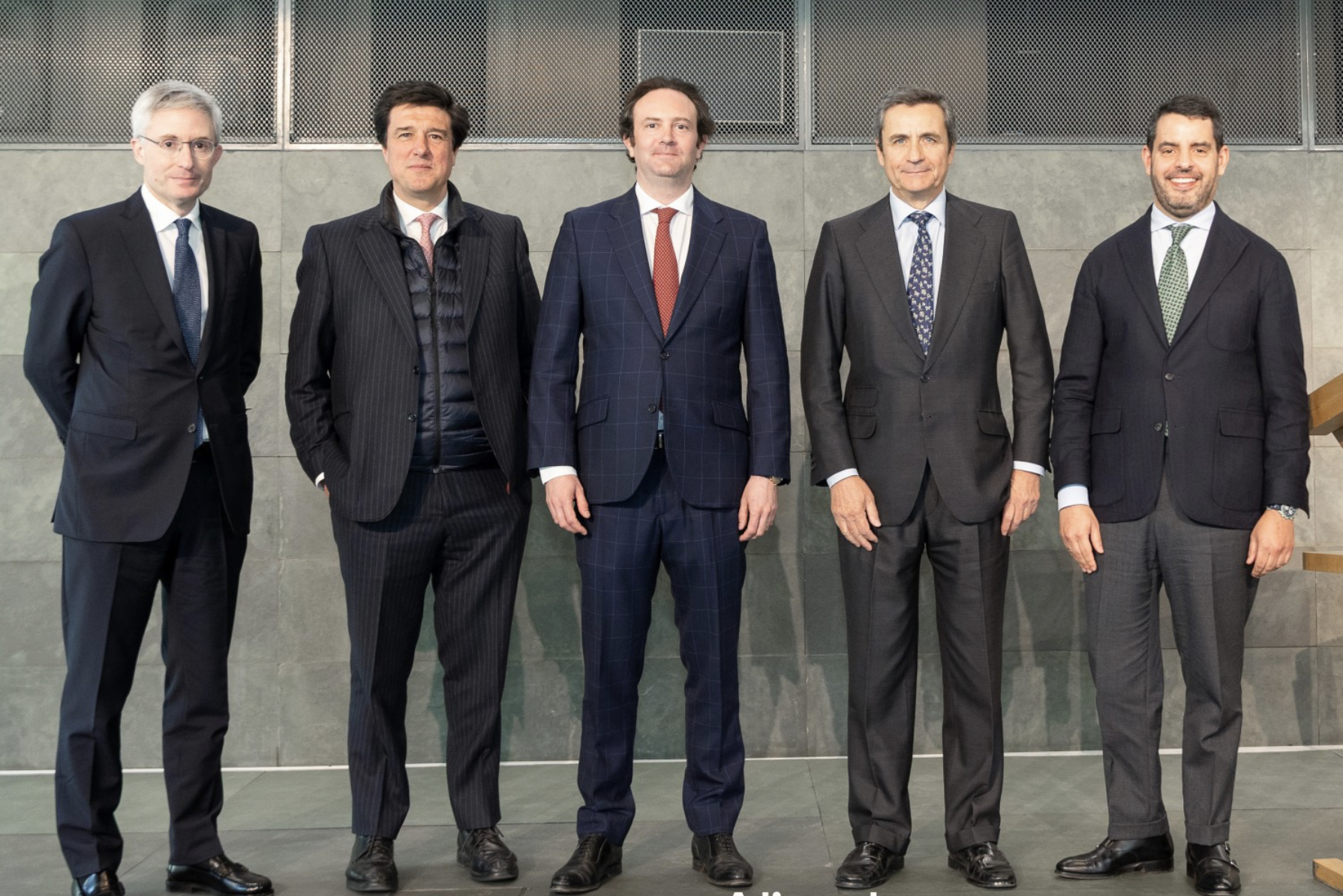
The highlight of the event was a panel discussion featuring Ismael Clemente, CEO of Merlin Properties; Óscar Duclert, CEO of Iroko Iberia; Eduardo Fernández-Cuesta, partner at Arcano Partners; and Eduard Mendiluce, CEO of Aliseda.
Eduard Mendiluce pointed out that, for the property sector, the focus should be on the real interest rate and argued that real estate remains an attractive investment product, particularly in assets where value can be created.
Eduardo Fernández-Cuesta warned that such a highly uncertain environment is not conducive to investment. He pointed to the rise in energy prices and the possibility that the situation could worsen if the international conflict drags on, leading to a sharper rise in inflation and renewed pressure on interest rates. In his view, this could result in a credit crunch that would be detrimental to investment. Óscar Duclert, for his part, expressed greater concern about the impact on private lending.
Ismael Clemente emphasised the disruption to supply chains, which could lead to shortages of raw materials, energy strains and inflation—a scenario to which central banks typically respond with rate hikes. In this context, he noted that markets with high interest rates and high inflation tend to rely more heavily on equity.
By segment, the office sector dominated much of the discussion. Clemente argued that there are secondary cities where it is possible to create high-quality product in a context of supply shortages, specifically citing cases such as Bilbao and Málaga. In these locations, he noted, rental yields could prove surprisingly high. He also explained that a significant amount of office stock is being converted into residential use, which is putting pressure on rents, not necessarily in the CBD.
Fernández-Cuesta agreed that it was a good time to invest in offices, both in Madrid and in other parts of Spain where no new properties had been built for years. Mendiluce added that in secondary locations, the key lay in repositioning. As he explained, in Madrid the Plan Reside aimed precisely to transform properties for more rational uses, but there was also scope for technical repositioning through efficiency improvements capable of generating non-obvious opportunities and differentiating the product.
On this point, Mendiluce noted that in commercial real estate, 75% of the €650 billion worth of existing stock does not comply with regulations and that by 2030 the European Union will require improvements to around 15% of it. In his view, this adaptation ultimately represents a real saving for the tenant, which is why he considered there to be significant potential in this type of transaction.
In the hotel sector, Duclert explained that Iroko Iberia analyses both urban and holiday establishments. In his view, small urban hotels often involve a certain risk in terms of occupancy. From Arcano, Fernández-Cuesta maintained that the sector is performing well in both segments, that both have sound fundamentals and that opportunities remain, albeit always subject to exclusivity criteria. Along the same lines, he noted that tourism will continue to be a source of wealth in Spain. Mendiluce added that small hotels attract considerable interest when CAPEX is reasonable and there are chains specialising in this type of boutique product that capitalise on their potential.
The living sector was also discussed. Regarding student accommodation, Mendiluce noted that there are areas where it is difficult to find additional supply and raised the possibility of converting schools due to close into new assets of this type. Regarding care homes for the elderly, he warned that reputational risks could arise from issues such as controlling the number of residents or the level of care, which is why he considered it essential to work with specialist operators. Fernández-Cuesta indicated that fundamentals are strong in student accommodation, whilst in care homes for the elderly he felt that a stable business model has not yet been consistently established.
In the industrial and logistics sector, Duclert considered that logistics facilities in Spain are expensive compared to other countries. In his view, opportunities lie in secondary markets, provided they have access to labour and infrastructure. He also noted that light industrial property is performing well in other European countries, particularly in sub-segments capable of absorbing the rent increases needed to modernise assets.
Clemente pointed out that Spain still lags behind in the development of e-commerce, which opens up room for growth, although he warned that the apparent ease of managing logistics has also increased supply and left pockets of vacancy in some areas of Madrid. Even so, he noted that Merlin Properties has seen rent increases. Fernández-Cuesta described logistics as a stable sector, where rents are also rising in secondary locations, although there is sometimes a lack of developers willing to invest.
On the subject of data centres, Clemente lamented the legislative pressures and social unease which, in his view, surround this segment in Spain, in contrast to the attitude in other markets. He noted that Europe is defining the location of its clusters and argued that the Iberian Peninsula has advantages it should exploit, avoiding, for example, limiting the available power. He also called for progress to be made so as not to rely exclusively on the grid in a country with significant renewable capacity.
As he explained, the main problem lies not in electricity generation, but in the grids, due to a lack of investment and the failure to allow the development of private grids. On this point, he criticised the fact that Spain has ‘strangled’ itself with certain environmental laws. He also argued that data centres do not pose a consumption problem, as they account for 0.5%, and that they should not be a problem with a properly sized grid, even though they may help to consolidate it. On the subject of water, he indicated that consumption is reasonable and depends on the technology used. Mendiluce added that in the coming years there could be a shortage of both labour and power, which is why he called for a national vision.
In retail, Duclert expressed a preference for retail parks with established rents, although he warned that some products are showing greater weaknesses. Fernández-Cuesta pointed out that the sector is no longer stigmatised, has very solid fundamentals and has seen investment grow. In his view, the most solid assets are dominant shopping centres or very specific properties, as it is not always easy to undertake a repositioning.
The speakers agreed that the Spanish property market continues to perform well and that there are significant opportunities beyond the traditional major hubs, led by Madrid and Barcelona. In this context, they highlighted the appeal of medium-sized cities and certain micro-markets with high yields, driven by new demand dynamics and the search for assets with greater potential for appreciation. This idea was subsequently elaborated upon by Luis Nuño, Director of CRE at Aliseda, and Luis Alonso, the company’s Director of Land, in their respective presentations.
Land, regeneration and services: the business areas outlined by Aliseda
Following the round table, Luis Nuño, Aliseda’s CRE Director, and Luis Alonso, the company’s Land Director, outlined the services provided by the firm. Nuño noted that Aliseda manages a portfolio valued at €1.5 billion, which is highly diverse and comprises retail premises, retail parks, shopping centres, hotels and logistics warehouses. This is a portfolio with a wide geographical spread, a strong presence in Tier 2 and Tier 3 markets, and an average to low-to-average value. As he pointed out, the company does not focus on individual assets, but operates with ease in large portfolios.
The executive argued that the objective has always been to create added value through asset management, rather than mere liquidation or marketing. In this work, Aliseda’s extensive network, supported by seven regional offices, enables it to capture a large number of opportunities and provide services in asset management, capital markets, energy efficiency consultancy and the sourcing of financing, both traditional and alternative.
Nuño also highlighted the role of EFFIC, which specialises in energy refurbishment, adapting properties to new regulations and generating monetisable energy savings. As he explained, this approach enables a return of between 20% and 30% on the investment made in the assets. Added to this, according to the company, is a database of over 5,000 investors, which Aliseda considers an advantage in identifying and managing commercial opportunities.
For his part, Alonso argued that land is currently the most essential type of asset. He noted that Aliseda is Spain’s largest land developer, with a portfolio valued at €2 billion, 85% of which is residential. This portfolio comprises 20 million square metres of buildable land, representing the capacity for 30,000 homes on ready-to-build land. The company added that its entire land portfolio has the potential to develop up to 120,000 homes.
In 2025, the firm sold €435 million worth of land to more than 400 different developers. Over the last three years, this figure rose to €1.3 billion, with capacity for 55,000 homes. Alonso also explained that they work with bespoke solutions and flexible financing.
In addition to selling, Aliseda acquired land worth €300 million through agreements with both major operators such as Metrovacesa and medium-sized and local developers. In the Community of Madrid, the company holds 98 plots, 51 of which are finalised, with the capacity for 3,100 homes. In the city of Madrid, the portfolio comprised 34 plots, 17 of which are at the final planning stage, for 2,000 units. Alonso emphasised that the company not only markets properties but also participates in asset management, noting that there is a significant amount of land in Madrid at advanced stages of development.
Another key focus of the meeting was the need to accelerate the refurbishment of Spain’s housing stock. Participants highlighted the role of Energy Saving Certificates as a tool to improve project financing and advance decarbonisation targets. In this context, they advocated for strengthening this mechanism to facilitate investment in energy efficiency and support the transformation of the housing stock in line with European regulatory requirements and climate targets.
At the closing session, Mendiluce highlighted Aliseda’s positioning as a platform capable of anticipating trends, generating opportunities and supporting its clients throughout the entire asset cycle, from identification to marketing. He also announced that the company will launch a digital marketplace in the coming months offering exclusive opportunities for clients, with information designed to speed up the analysis of each project and connect investors with the firm’s managers.